

The panic is usually a maths problem
You are not out of time. You do not know the number.
Ask someone how long they have and they say no time at all. Ask them the date of the exam and it turns out to be five weeks away.
Dread stays vague on purpose. It is easier to feel behind than to count. But a vague number grows every night you leave it alone, and a real one stops growing the moment you write it down.
So count it. Not the weeks. The days, and the hours you will actually sit down for.
How long have you actually got?
Whatever the total came to, split it roughly in three. About half for learning things properly, a third for practising them under time, and the last stretch for review only.
The final week is not for new topics. If something is still unlearned by then, it is cheaper to make sure everything else is solid.
Your timetable died on Wednesday
The plan was never the problem. Rebuilding it was.
Sunday timetables are beautiful. Colour coded, every hour spoken for, deeply satisfying to make.
Then Tuesday goes wrong. Something runs late, or you are just tired. By Wednesday you are two sessions behind a schedule with no room in it, so you throw the whole thing out and make a new one. That is another hour of not revising, and it will die on Wednesday too.
A plan you are allowed to miss is worth more than a plan you have to obey.
What missing days actually costs
Rigid timetable
1h 30m
crammed into one evening, on top of that evening's work
Rolling plan
5 min
added to each of the next 18 days
So do not rebuild. Push everything one day later and let the least valuable session drop off the end.
Losing one review session costs you almost nothing. Losing the plan costs you the rest of the term.
Re-reading feels like working
If it feels easy, it is probably doing nothing.
You read the page. You recognise every word. Your brain reports back that you know this, and it is a convincing feeling.
Recognition is not recall. In the exam there is nothing in front of you to recognise, which is the first time you find out the difference.
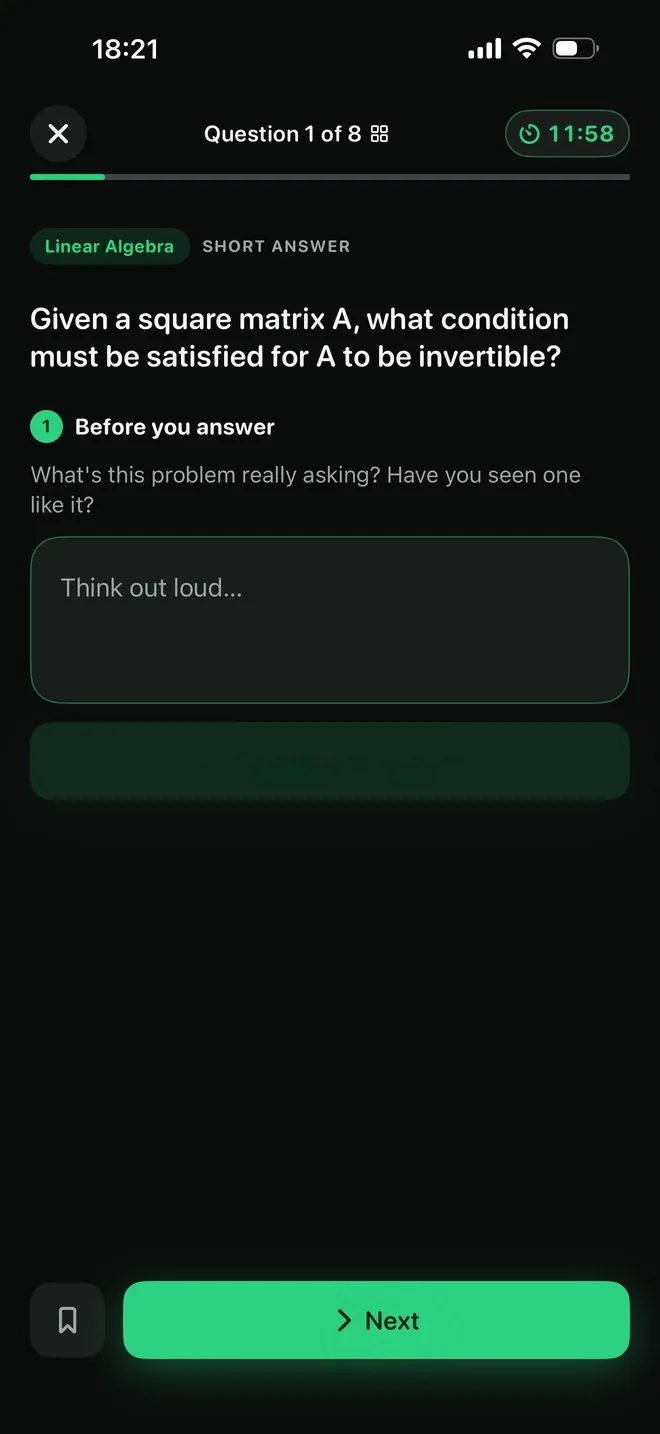
The fix is quick and genuinely unpleasant. Close the book. Write down what you remember, or say it out loud to nobody. Then check. The gap you just found is the actual revision.
What is left by exam day
Read it once, or come back to it. Same topic, four weeks.
60% still there on exam day, against 22% if you only read it once
The spacing that works is wider than it feels. A day later, then three days, then a week, then two. You are aiming to meet it again just before it slips, not while it is still fresh.
None of this needs software. It needs a list of what you got wrong and the nerve to go back to it.
You are revising what you already know
Comfort is the most expensive habit in revision.
The topics you enjoy are the ones you already understand. Going over them feels excellent and moves nothing. The ones you quietly avoid are the ones costing you marks.
There is one reliable way to find out which is which, and it is the thing students put off longest.
Feels productive
- Re-reading the chapter
- Highlighting
- Copying notes out neatly
- Making the timetable
- Watching a video about it
Actually moves marks
- Writing it out from memory
- Doing the question badly, then checking
- Marking your own work honestly
- Redoing the ones you got wrong
- Explaining it to someone else
Sit a paper, and sit it early, while a bad score is still useful. A bad mock in March is information. The same score in May is just bad news.
It is 9pm and you have not started
The hard part is not revising. It is starting.
The gap between deciding to revise and actually revising is where the whole evening goes. Rarely because the work is hard. Usually because the first move is unclear, and an unclear first move is indistinguishable from your phone.
So make the first move small enough to be a bit stupid. Not revise vectors. One question. Open the paper, do question one, and stop afterwards if you still want to.
You almost never still want to.
- One question, not one topic
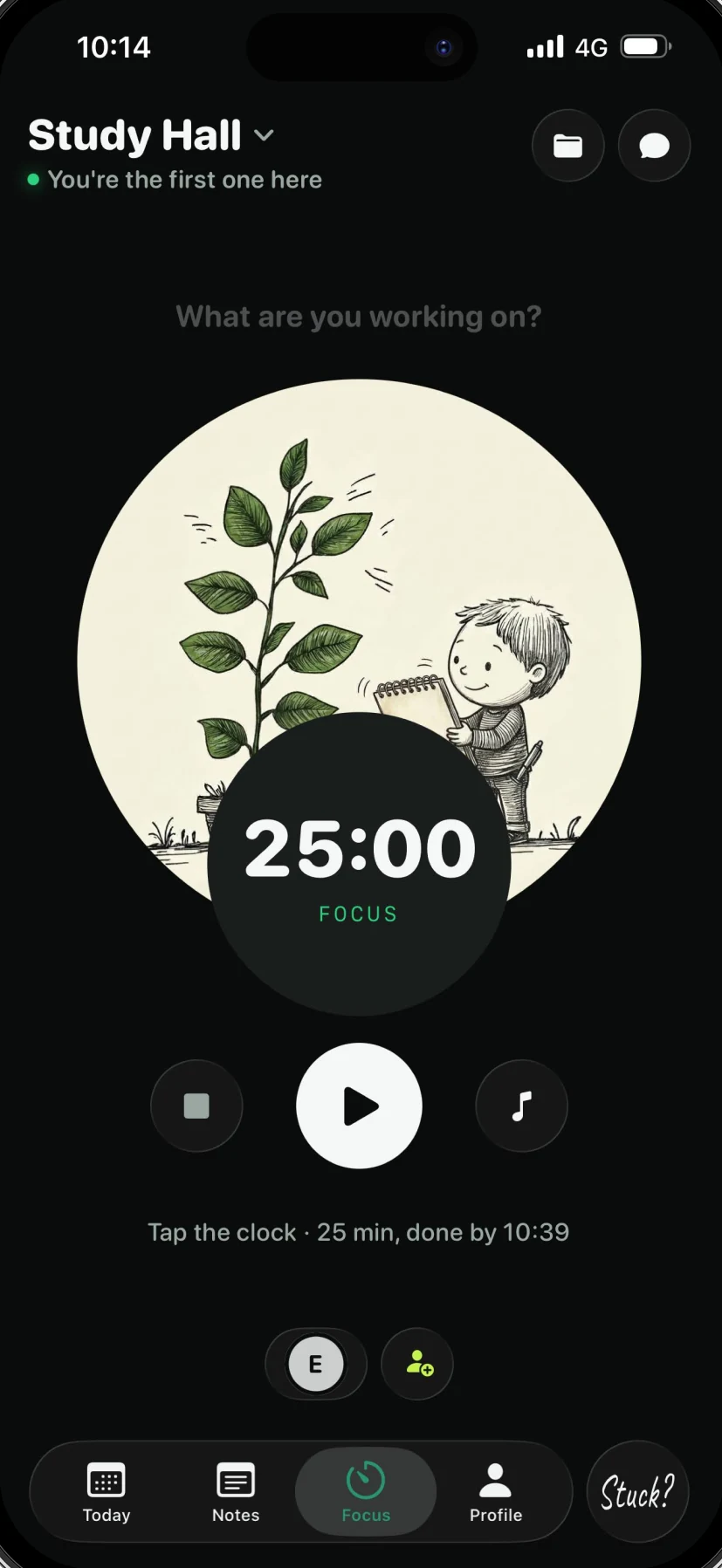
- Ten minutes, timer where you can see it
- Phone in another room, not face down
- Same desk, same time, no decision to make
The night before
Nothing you learn tonight will be there tomorrow.
The last evening is not for new material. Read your own notes on the things you got wrong, then stop.
Cramming trades tomorrow's recall for tonight's feeling of having done something. It is a bad trade and you make it while tired, which is why it keeps happening.
Steal the method
All of this works on paper. Here it is in five lines.
- Count backward from the date. Write the number down.
- Miss a day, move everything one day later. Never rebuild.
- Close the book. Explain it out loud, then check.
- Come back after a day, then three, then a week, then two.
- Sit papers early enough that a bad one still helps.
Where an app comes into it
Every one of those lines works with a notebook. We built Plan2Ace because the part that fails is not the method, it is keeping it up for eleven weeks.
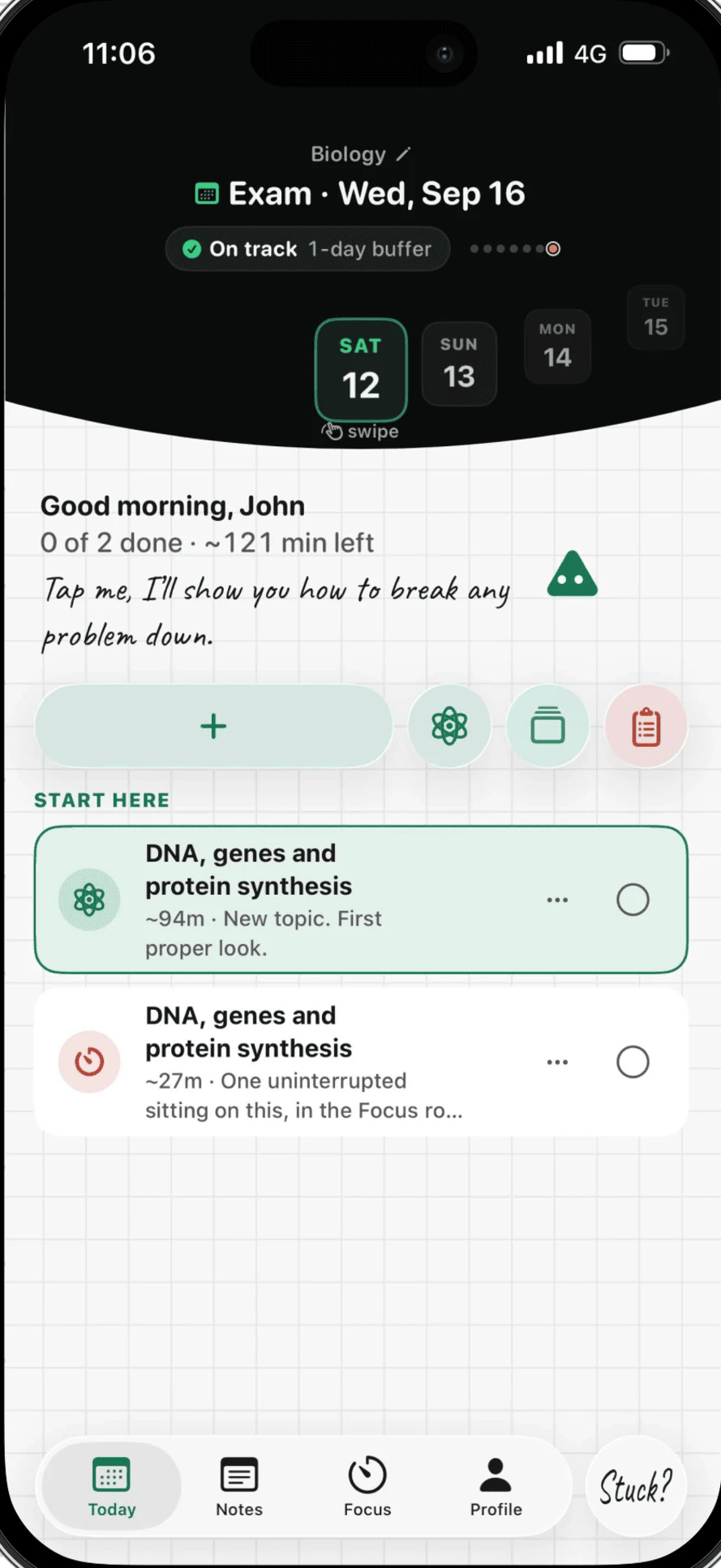
It counts the days, moves the work along when you miss a day, and brings back the questions you got wrong on the day you were about to forget them. That is the same list above, run for you.
If you would rather run it yourself, run it yourself. The method is the point.
Questions students ask
How many hours a day should I revise?
Fewer than you think, more often than you do. Two focused hours you actually finish beat six you plan and abandon. Pick a number you can hit on a bad day, because the bad days decide whether the plan survives.
Is it too late to start?
Almost never, but what you should do changes. With months left you can learn properly. With two weeks left, stop learning new topics and spend the time on questions and on what you got wrong. Coverage beats depth when time is short.
Past papers or notes first?
Papers, earlier than is comfortable. A paper tells you what you do not know. Notes only tell you what you already wrote down.
Does highlighting work?
Barely. It feels productive because it is easy, and easy is the signal that nothing is being learned. Close the book and write down what you remember instead.
How do I stop panicking?
Turn the fear into a number. Count the days, write down what is actually on the paper, and pick the one thing you will do tonight. Vague dread grows. A number and a next step do not.
Set the date. See the plan.
Free to start. About a minute.
Download on theApp StoreiPhone, iOS 26.5 or later